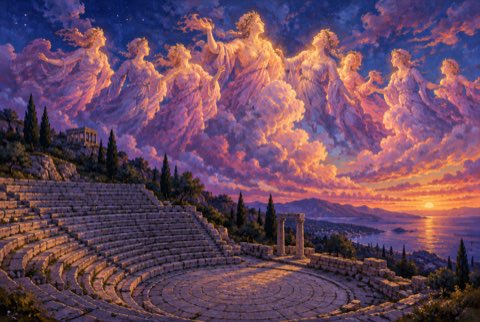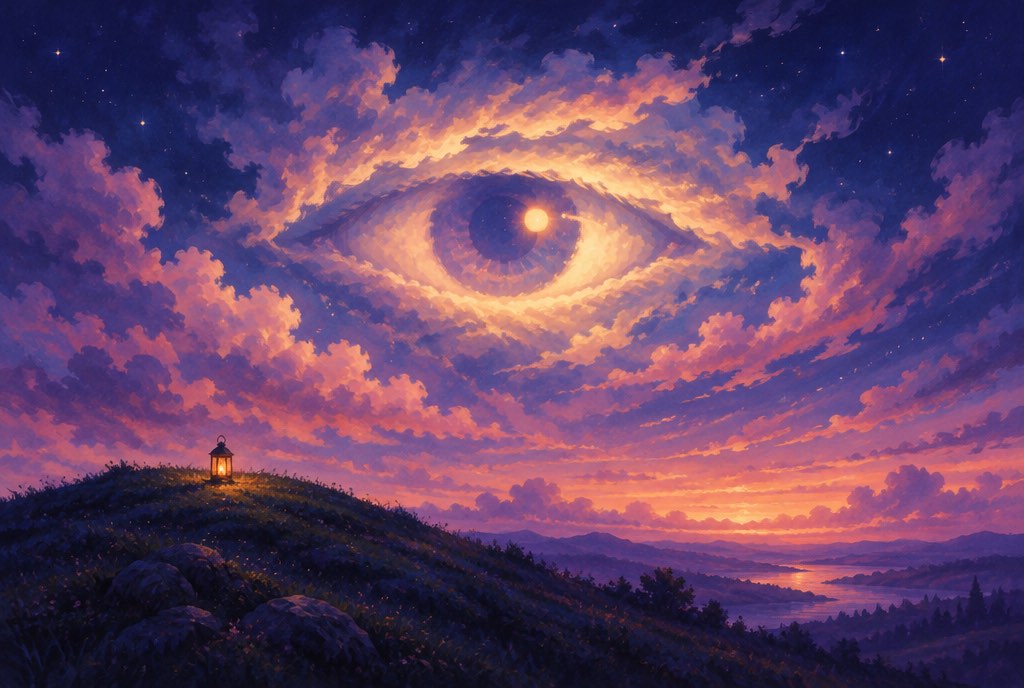
Nephomancy is divination by clouds: watching the sky, noticing what the shapes seem to say, and taking it as a message. The word is built from two Greek parts, nephele, meaning cloud, and manteia, meaning divination, the same ending we find in necromancy, geomancy and chiromancy.
It sits inside a larger family called aeromancy, the reading of the air and sky. Its cousins include reading thunder and lightning, shooting stars and strange lights overhead. The tidy -mancy names are later inventions, though. Nobody in the ancient world called their craft nephomancy, and the first recorded English use of "aeromancy", in 1753, meant the study of the atmosphere rather than prophecy.
What people did long before the word existed is a patchier story. Babylonian scribes collected thousands of omens from the heavens and the weather. Han-era Chinese writers described cloud-watching as part of a system of lucky and unlucky signs. A late-antique writer, Damascius, reports a woman who saw a man and a lion take shape in the clouds. Some of these accounts are well documented and some reach us at second or third hand, and in this blog we will try to say which is which.
There is no canonical rulebook, which is part of the charm. Clouds never repeat, so a reading is always about this sky, this afternoon, and the person looking up. Today we treat it as a game of attention and imagination: an invitation to look closely and ask what you notice. It is entertainment and reflection, not prediction, and the fun is in the looking.