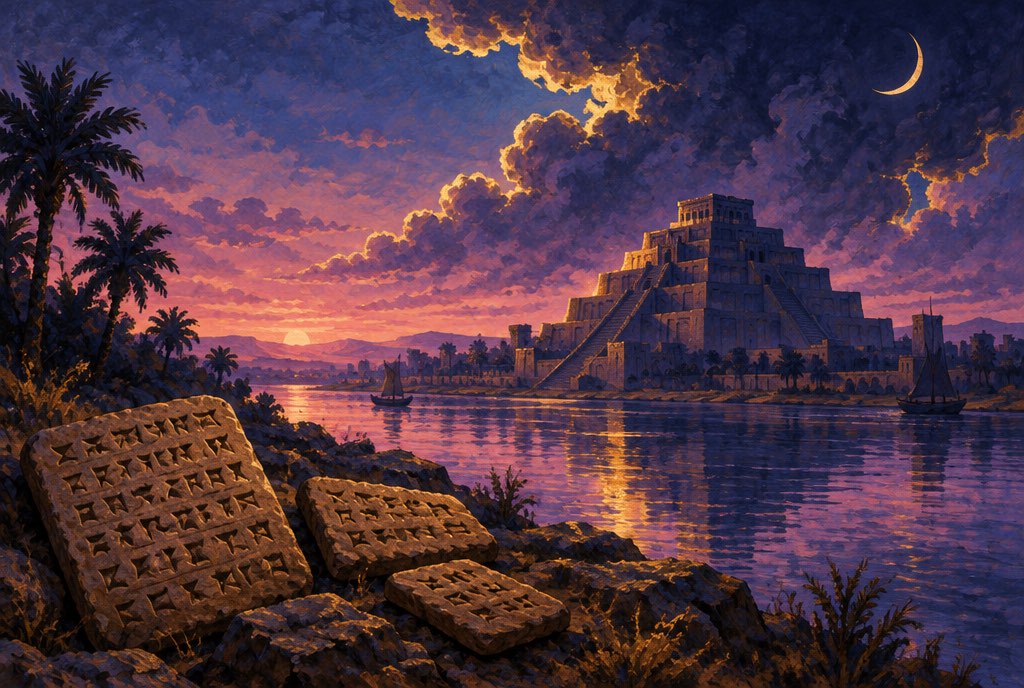
The richest early library of sky omens comes from Mesopotamia. Enūma Anu Enlil, named after its opening words, is a series of around seventy tablets holding roughly seven thousand omens. It was compiled and copied over many centuries, from the Old Babylonian period onward, and it covers the Moon, the Sun, the planets and the weather.
Weather had its own section, around tablets 44 to 49 in modern editions: thunderstorms, winds, rain and the signs that came with them. The Sun tablets, around 23 to 29, include omens about how the Sun looked when it appeared among clouds of particular shapes and colours. So clouds do appear, usually as part of a larger scene in the sky.
The omens follow a formula: if this happens in the sky, then this will happen on earth. Most concern the king and the state, not the ordinary person. Specialist scholars watched the heavens and sent reports to the Assyrian kings, who weighed them when deciding about war, harvest and ritual. A cloud was a matter of politics long before it was a matter of personal fortune.
You may read online that Babylonian priests practised nephomancy as a distinct art. Historians do not quite say that. What survives is a huge tradition of celestial and weather omens, in which clouds play a part, not a separate craft of reading cloud shapes. It is a good reminder that the ancient story is richer than the slogan, and we would rather tell you the careful version.