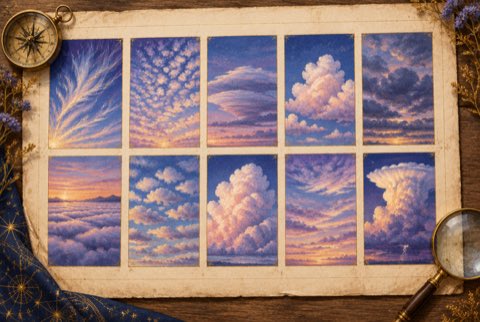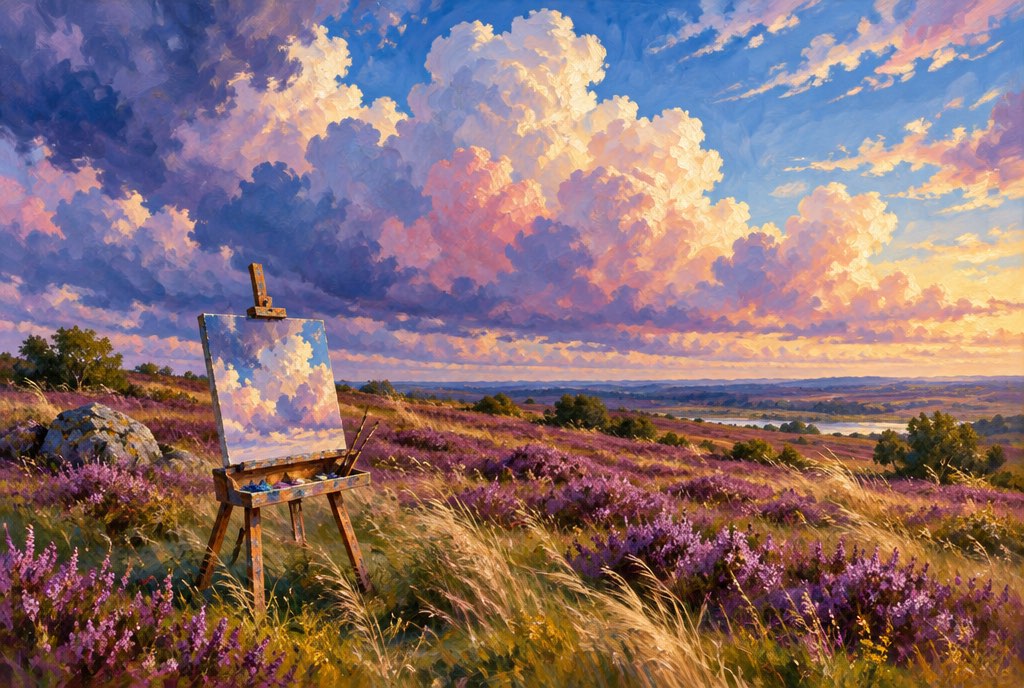
John Constable, born in Suffolk in 1776, believed that a landscape was only as good as its sky. In the summers of 1821 and 1822, living near Hampstead Heath on the northern edge of London, he made dozens of small oil studies of clouds, working fast outdoors. He called it "skying".
On the back of many of the studies he wrote the date, the time of day, and the direction and strength of the wind. They are as much weather records as paintings. He was trying to understand how a cloud actually looks and moves, not to paint an idealised heavenly backdrop.
In a letter of October 1821 to his friend John Fisher, he declared that the sky is the "key note", the "standard of scale" and the chief "organ of sentiment" in a landscape. A painter who neglects it, he said, throws away one of the greatest aids to his art. That was a bold thing to say in a period when skies were often a formula.
It is no accident that his studies come from the same era in which Luke Howard's names for clouds were spreading. People were learning to look at the sky properly, and to look at it as it really was.
Each of his sketches took only minutes, because the sky would not wait. Anyone who has tried to photograph a cloud and found it had changed before the shutter clicked will know the feeling.